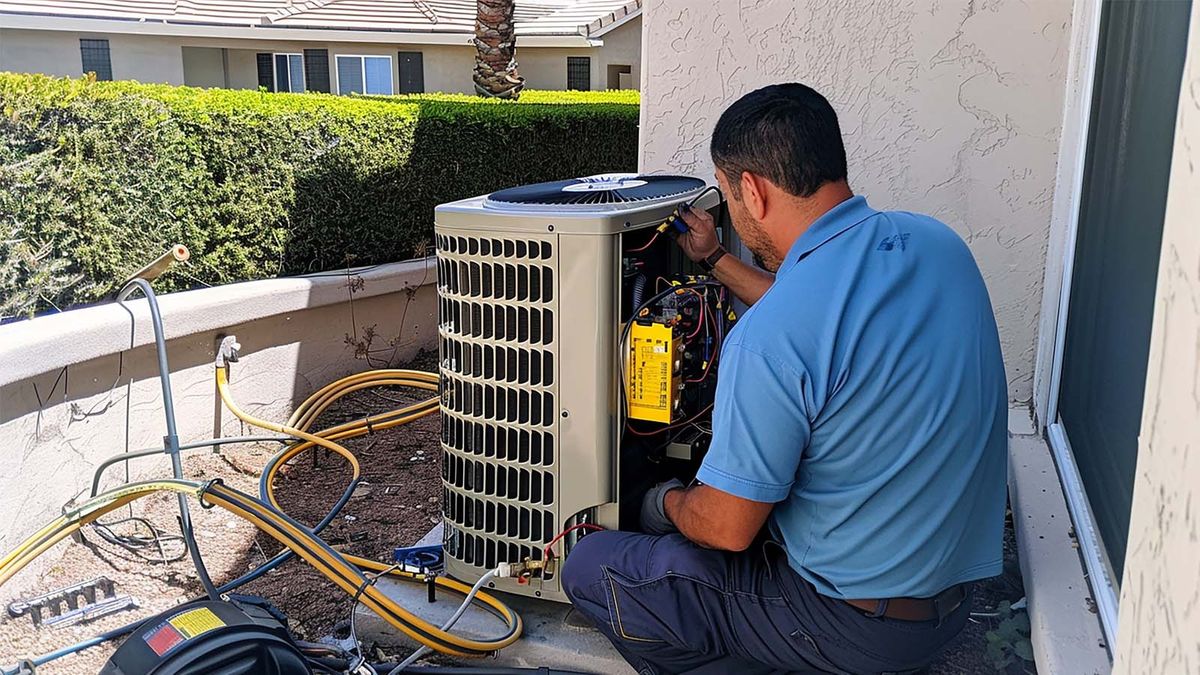
Technician servicing the electrical compartment of an outdoor air conditioning unit with the service panel removed

AC Repair in Fort Lauderdale, FL: What Homeowners Should Know

When an AC in Fort Lauderdale starts blowing warm air or leaking water, the cause is rarely the part that looks guilty. Aura America HVAC provides residential AC repair in Fort Lauderdale, FL, and every repair starts with a diagnosis of the whole system, not a guess.

Not every cooling problem means a major component has failed. Understanding the difference is what separates a lasting repair from a temporary fix.

For homeowners, recognizing the warning signs and knowing what to expect from a professional HVAC contractor can make the entire repair process more straightforward.

Common AC Problems and Their Possible Causes

Air conditioning systems often show similar symptoms even when the underlying problems are completely different. A professional inspection helps establish what is actually happening rather than relying on assumptions.

Here are several common situations that indicate your system may need attention.

AC blowing warm air

When the air conditioner runs but fails to cool your home, several components may be responsible:

  • Restricted airflow caused by a clogged filter or obstruction.

  • Dirty evaporator or condenser coils.

  • A malfunctioning thermostat or electrical control.

  • Problems within the refrigerant circuit.

  • A failing compressor or fan motor.

For example, warm air does not automatically indicate low refrigerant. The technician must evaluate airflow, electrical operation, and system performance before determining the cause.

Water leaking around the indoor unit

Your air conditioner removes moisture from indoor air as part of the cooling process. This moisture collects in the condensate drain system and should be directed safely away from the equipment.

Water around the indoor air handler may indicate:

  • A blocked condensate drain line.

  • A damaged or overflowing drain pan.

  • Improper drainage.

  • Excess condensation associated with an airflow or equipment problem.

Ignoring a leak can lead to damage to nearby walls, ceilings, flooring, and other materials.

Unusual noises during operation

New or unusually loud sounds can indicate mechanical or electrical problems.

  • Buzzing may be associated with electrical components or motors.

  • Rattling can indicate loose panels or internal components.

  • Grinding may point to mechanical wear or motor problems.

  • Repeated clicking can be related to electrical controls or starting components.

The type of noise, when it occurs, and whether it changes during operation all help narrow down the possible causes.

Frequent starting and stopping

An air conditioner that repeatedly switches on and off may be experiencing short cycling. This can result from thermostat problems, restricted airflow, electrical faults, equipment sizing issues, or other operating conditions.

Frequent cycling affects temperature control and places additional demands on system components.

How Fort Lauderdale’s Climate Affects Residential AC Systems

Fort Lauderdale’s location in Broward County, close to the Atlantic coast, creates environmental conditions that deserve particular attention when maintaining residential HVAC equipment.

Humidity and indoor moisture

Air conditioning in South Florida is about more than reaching the temperature selected on the thermostat. A properly operating system must also remove excess moisture from indoor air.

When humidity remains high despite continuous cooling, the problem may involve restricted airflow, evaporator coil performance, equipment operation, or the condensate drainage system.

This is particularly important in Florida homes, where persistent indoor moisture can affect comfort and contribute to moisture-related problems in building materials.

Coastal salt exposure

Properties closer to the Atlantic coastline may experience exposure to salt carried by sea spray and coastal air. Salt deposits can contribute to corrosion on susceptible metal surfaces, including components of outdoor AC equipment.

The extent of exposure varies depending on the property’s location and the placement of the condenser. During an inspection, technicians should pay attention to visible corrosion, the condition of the outdoor coil, and the general condition of the equipment cabinet.

Long cooling seasons

Unlike areas with a short summer, Fort Lauderdale homeowners depend on air conditioning year-round. Extended operating periods place sustained demands on motors, electrical components, coils, and other equipment.

This makes regular professional maintenance, such as our tailored AC maintenance plans, especially valuable. Scheduled inspections can help identify developing issues, assess airflow, and check condensate drainage before a minor problem becomes a more disruptive breakdown.

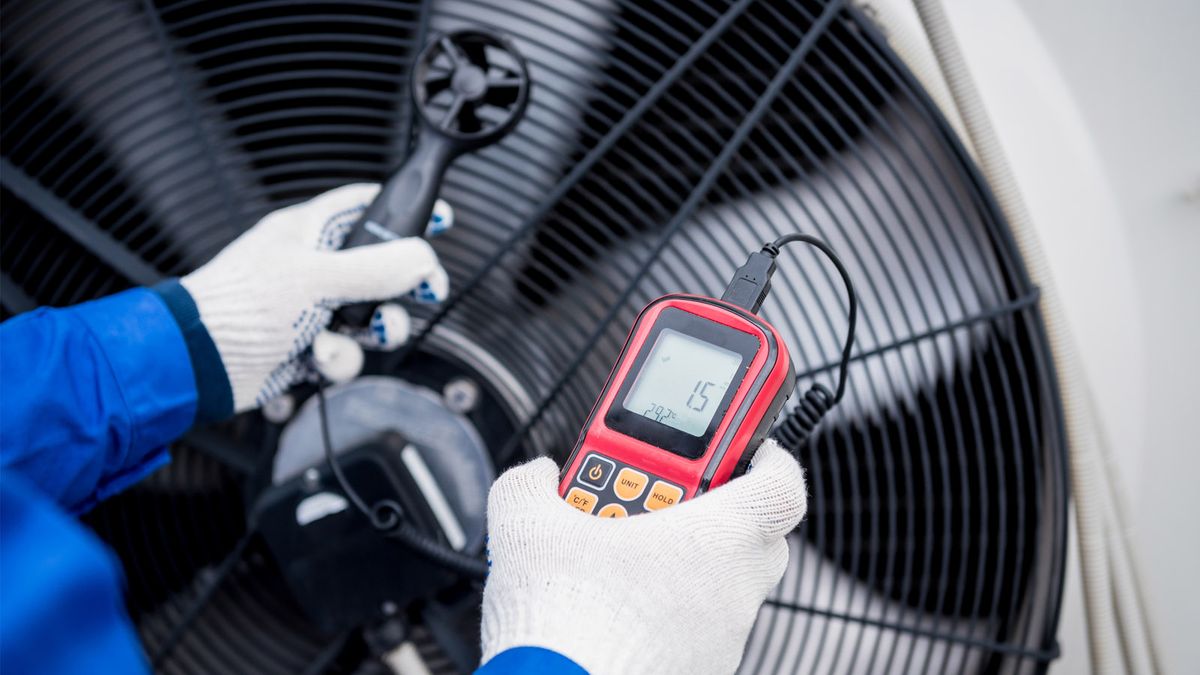
Technician using a digital anemometer to measure airflow at an outdoor air conditioner condenser fan during a diagnostic

What Should a Professional AC Diagnostic Include?

A dependable AC repair starts with a systematic inspection. Replacing a component based on one symptom without checking the rest of the system can leave the original problem unresolved.

During a residential diagnostic visit, the technician should evaluate the equipment according to its condition and reported symptoms.

A professional assessment may include:

  • Thermostat and control inspection: Checking temperature settings, control operation, and the system’s response to a cooling demand.

  • Airflow assessment: Evaluating the filter, blower operation, return airflow, and accessible duct connections for restrictions.

  • Indoor unit inspection: Examining the evaporator coil, drain pan, condensate line, and surrounding components for dirt, blockages, and visible moisture.

  • Outdoor condenser inspection: Checking the condenser coil, fan, cabinet, accessible wiring, and signs of physical deterioration or corrosion.

  • Electrical and mechanical testing: Assessing relevant electrical connections, motors, starting components, and operating conditions using appropriate diagnostic equipment.

  • Refrigerant-system evaluation: Taking the necessary measurements when symptoms indicate a possible refrigerant issue.

After completing the inspection, the technician should explain the findings, identify the confirmed malfunction, and outline the recommended repair.

If several issues are present, the homeowner should understand which one is affecting system operation and whether other components require attention.

The purpose of a diagnostic visit is not simply to identify a faulty part. It is to understand why the system is underperforming and determine what work will restore reliable operation. Learn more about our expert AC repair services in South Florida.

AC Repair or Replacement: How to Make the Right Choice

A malfunction does not automatically mean your air conditioner needs to be replaced. If the equipment remains in good overall condition and the problem is isolated, repairing the existing system may be the most practical solution.

Replacement deserves consideration when the equipment has extensive deterioration, recurring breakdowns, major component damage, or persistent performance limitations.

Several factors should guide the decision:

  • Equipment age: How long has the system been operating, and is it approaching the end of its expected service life?

  • Repair history: Are breakdowns becoming more frequent, or have the same problems returned?

  • Overall condition: What is the condition of the compressor, coils, motors, electrical components, and drainage system?

  • Cooling performance: Can the system maintain comfortable temperatures throughout the property?

  • Humidity control: Does the equipment remove moisture effectively?

  • Energy efficiency: Would newer equipment offer a meaningful improvement in operating efficiency?

  • Installation requirements: Would replacement require changes to electrical connections, ductwork, refrigerant lines, or condensate drainage?

Proper equipment sizing is equally important when considering a replacement. An oversized or undersized system may struggle with temperature consistency and humidity management.

The best recommendation should reflect the property’s actual cooling requirements, the condition of the existing equipment, and the long-term practicality of each option.

How to Choose a Licensed AC Repair Company in Fort Lauderdale

Finding an HVAC contractor is easy. Finding one that approaches your home’s cooling system professionally, explains its recommendations, and performs work based on a proper diagnosis requires more attention.

Before scheduling AC repair in Fort Lauderdale, consider these important points:

1. Verify the Florida contractor license

Always ask for the contractor’s license number and verify that it covers the work being performed. Proper licensing is an essential starting point when evaluating an HVAC company.

Aura America HVAC operates under Florida license CMC1251254.

2. Look for a genuine local presence

A company familiar with South Florida understands the environmental conditions affecting residential equipment, including humidity, coastal exposure, and extended cooling demands.

Aura America HVAC has an office in Pompano Beach, within Broward County, providing a nearby operational base for serving Fort Lauderdale homeowners. The company also operates a second office in Big Pine Key. See our air conditioning services in Fort Lauderdale page for the areas we serve.

3. Ask what the diagnostic visit includes

A professional contractor should be able to explain how the technician will investigate the reported problem.

Look for a company that:

  • Checks the relevant indoor and outdoor components.

  • Uses appropriate diagnostic equipment.

  • Investigates the cause rather than immediately suggesting replacement parts.

  • Explains the findings in understandable terms.

  • Provides a repair recommendation based on the equipment’s actual condition.

4. Expect a clear explanation of the proposed work

You should know what has failed, why the repair is necessary, and whether other components are affected.

A professional technician should distinguish between an immediate repair requirement and additional maintenance recommendations.

5. Request a clear repair scope before authorizing work

The proposed work should identify the problem, the recommended solution, and the relevant parts and labor involved.

A reliable company determines the scope and cost after inspecting the equipment on-site. Be cautious of definitive repair quotes based only on a short phone conversation.

6. Consider residential HVAC experience

Every home has different cooling requirements. Property layout, ductwork, insulation, equipment placement, and airflow distribution can all influence system performance.

Choose a contractor who considers the entire cooling system rather than focusing exclusively on the malfunctioning component.

7. Check communication options

Technical explanations should be clear, especially when discussing equipment failures and repair recommendations.

Aura America HVAC has Russian- and Spanish-speaking technicians on staff, giving homeowners additional options when discussing technical aspects of their service.

Ultimately, a good HVAC contractor should help you understand your system, make an informed decision, and feel confident about the work being performed.
Professional Residential AC Repair in Fort Lauderdale

When your air conditioner stops performing as expected, an accurate diagnosis is the foundation of an effective repair.

Aura America HVAC provides residential air conditioning diagnostics, repair, maintenance, and installation services in Fort Lauderdale and surrounding South Florida communities.

Our approach focuses on identifying the source of the problem, evaluating the equipment’s condition, and recommending solutions based on the property’s actual cooling requirements.

If your AC is blowing warm air, leaking water, making unusual noises, or struggling to maintain a comfortable indoor temperature, arrange a professional inspection.

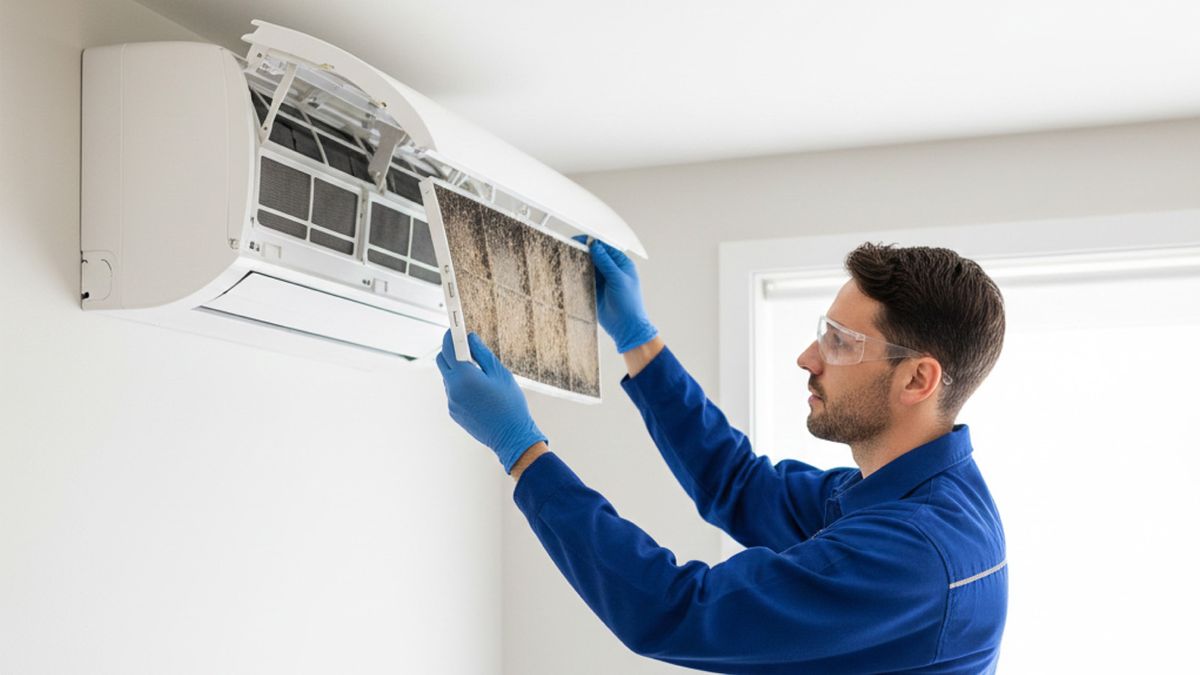
Technician in safety glasses and gloves removing the air filter from a wall-mounted AC indoor unit to inspect it

Frequently Asked Questions About AC Repair in Fort Lauderdale

1. Does Aura America HVAC provide AC repair in Fort Lauderdale, FL?

Yes. Aura America HVAC provides residential air conditioning diagnostics and repair services in Fort Lauderdale. Every repair visit begins with an assessment of the equipment to identify the cause of the problem and determine the appropriate solution.

2. Why is my air conditioner running but not cooling my home?

Possible causes include restricted airflow, dirty coils, thermostat malfunctions, electrical faults, or problems within the refrigerant system. A professional diagnostic evaluation is necessary to establish which issue is responsible.

3. What should I do if my AC is leaking water?

Water around the indoor air handler may indicate a blocked condensate drain, a damaged drain pan, or another moisture-management problem. Arrange a professional inspection promptly to prevent continued water exposure and potential property damage.

4. How much does AC repair cost in Fort Lauderdale?

The cost depends on the confirmed malfunction, equipment condition, parts required, accessibility, and labor involved. Aura America HVAC determines the scope of work and provides a quote after an on-site inspection and diagnostic evaluation.

5. Should I repair or replace my older air conditioning system?

Age is only one consideration. Repair history, overall equipment condition, cooling performance, energy efficiency, and the nature of the current malfunction should also be evaluated. A technician can assess these factors and explain which option is more suitable for your home.

Call Aura America HVAC at 754-270-5435 to schedule your AC repair inspection in Fort Lauderdale.