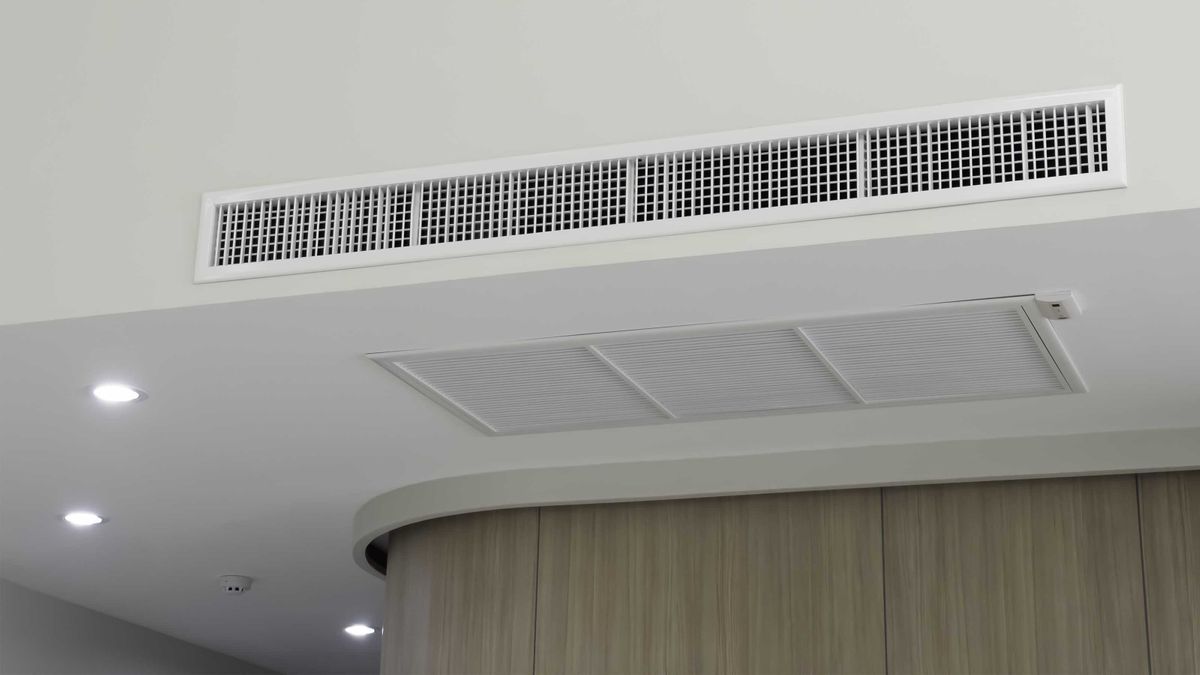
A central air conditioning system cools a home by moving indoor air across a refrigerant-cooled coil and distributing it through ducts. A typical setup includes an outdoor unit, an indoor air handler and evaporator coil, ductwork, and a thermostat. Unlike a ductless mini-split, central AC uses ducts to cool multiple rooms.
Central Air Conditioning
Aura America HVAC
What Is a Central Air Conditioning System?
Homeowners searching for central air conditioning or a central AC unit usually want one system to cool several rooms. In a typical split system, the outdoor condensing unit works with indoor equipment, often an air handler containing the evaporator coil. Ducts deliver conditioned air to rooms and return indoor air to be cooled again.
“Central” describes how the system distributes air. The outdoor unit releases heat, indoor equipment circulates and conditions the air, and ducts connect the system to living spaces. A ductless mini-split also has indoor and outdoor components, but its indoor units deliver conditioned air directly without a central duct network.
In Florida, existing ductwork, attic conditions, room layout, insulation, and humidity all affect system performance.
How Central AC Works: The Cooling Cycle
Central AC does not create cold air. It transfers heat from indoors to outdoors through a refrigerant circuit. The cycle repeats whenever the thermostat calls for cooling.
Return air: Grilles draw indoor air through a filter and back to the air handler.
Heat absorption: Refrigerant in the indoor evaporator coil absorbs heat from the air. Moisture may also condense on the cold coil.
Air distribution: The blower pushes cooled air through supply ducts and into rooms. Proper airflow is essential for even cooling.
Heat release: The compressor pressurizes and circulates refrigerant. The outdoor condenser coil and fan release the collected heat outside.
Drainage: Condensed moisture flows into a drain pan and out through the condensate line — a particularly important component in humid Florida.
The thermostat controls operation, but it cannot correct poor duct design, incorrect system sizing, restricted airflow, or refrigerant and drainage problems. Comfort depends on the entire system working properly.
The Main Components — and What Deserves Attention
A central AC system combines mechanical, electrical, and air-distribution components. A fault in one area can affect the performance of the rest.
| Component | What it does | Possible sign of a problem |
|---|---|---|
| Outdoor condenser coil | Releases heat from the refrigerant into the outdoor air. | Reduced cooling performance or visible buildup around the coil. |
| Compressor | Pressurizes and circulates refrigerant through the system. | The system struggles to cool, makes unusual sounds, or fails to operate. |
| Condenser fan | Moves outdoor air across the condenser coil. | The fan does not run normally or the outdoor unit overheats. |
| Indoor evaporator coil | Absorbs heat and helps remove moisture from indoor air. | Weak cooling, changes in airflow, or ice on the coil. |
| Air handler and blower | Moves return air through the equipment and supply ducts. | Weak airflow, uneven room temperatures, or unusual blower noise. |
| Condensate pan and drain | Collects and carries away moisture removed from the air. | Water near the indoor unit, an overflow safety switch activation, or musty odors. |
| Electrical components | Control and power motors, the compressor, and safety functions. | Intermittent operation, failure to start, or repeated shutdowns. |
| Ductwork | Delivers conditioned air and returns indoor air to the system. | Uneven temperatures, excessive dust, or rooms that are difficult to cool. |
Symptoms are clues, not diagnoses. Weak cooling may involve airflow, coils, duct leakage, controls, or the refrigerant circuit. A technician should assess the system before recommending a repair.
Why Central Air Conditioning Has to Work Harder in Florida
South Florida systems face long cooling seasons and moisture-heavy air. They must manage humidity as well as temperature.
Humidity Is Part of the Cooling Load
Comfort in Florida depends on humidity as well as the thermostat setting. Moisture enters through doors, windows, building leaks, and everyday activities. As air passes over the evaporator coil, water condenses and drains away.
Oversized equipment may cycle too frequently, reducing moisture removal. Airflow, drainage, or coil problems can also leave a home feeling clammy even when the temperature seems comfortable.
Attic Ductwork Is Exposed to Heat
Many Florida homes have ducts in hot attics. Poor insulation, damaged connections, or leaks can reduce the amount of cooling delivered to rooms. Leaks on the return side may also draw hot, humid attic air into the system.
When rooms cool unevenly, a professional evaluation should include the condition and performance of the ductwork.
Coastal Air Brings Salt and Corrosion Concerns
Near the coast, salt-laden air and persistent moisture can accelerate corrosion on exposed metal surfaces and electrical connections. Equipment condition, placement, and an appropriate maintenance routine are especially important for coastal properties.
SEER2 and Florida Efficiency Requirements
SEER2 is the seasonal efficiency rating used for residential central air conditioners. The U.S. Department of Energy introduced updated testing procedures and efficiency standards effective January 1, 2023.
Florida is in the Southeast region. For split-system central air conditioners installed from that date, the minimum rating is 14.3 SEER2 for systems below 45,000 Btu/h and 13.8 SEER2 for systems rated at or above 45,000 Btu/h.
These are regulatory minimums, not universal buying recommendations. Equipment selection should also account for cooling load, ductwork, humidity, and operating conditions.
Source: U.S. Department of Energy, 2023 Central Air Conditioner Standards: https://www1.eere.energy.gov/buildings/appliance_standards/pdfs/2023_CAC_Standards_FAQ_10-5-2022_Final.pdf.
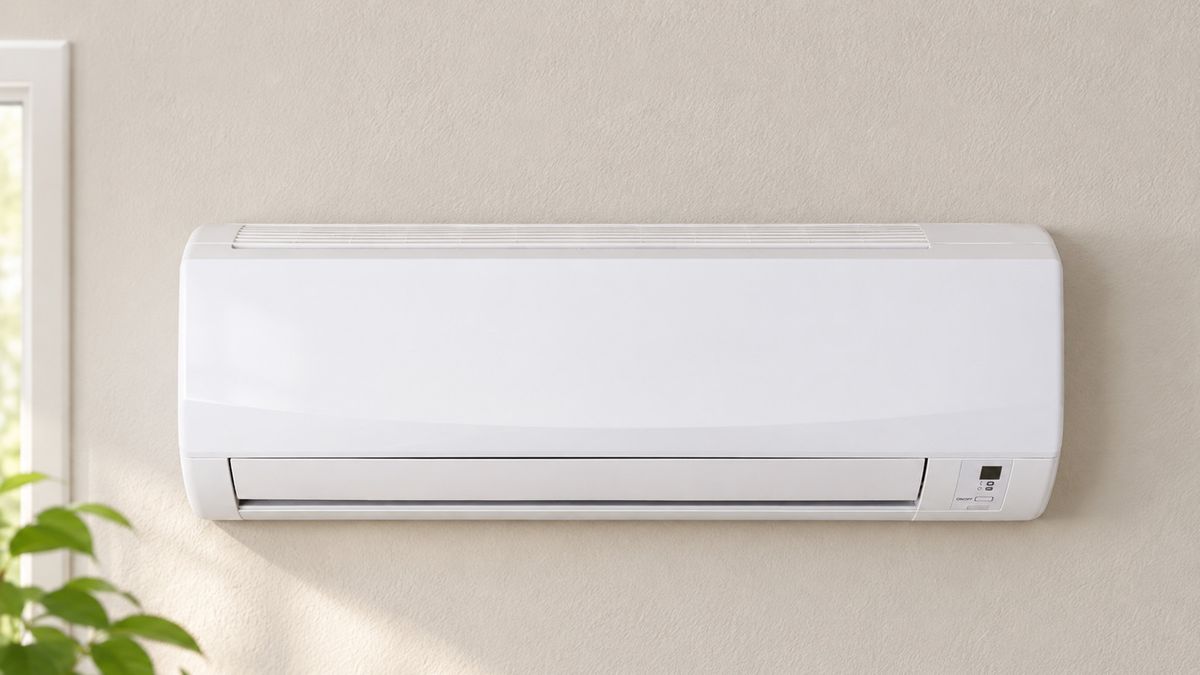
Central AC or a Ductless Mini-Split: Which Fits the Home?
Neither system is automatically better. The right option depends on the building and how the household uses each space.
Choose central AC when the home already has suitable, well-designed ductwork and the goal is whole-home cooling through one integrated system.
Consider a ductless mini-split when there is no practical duct network, an addition or converted room needs independent cooling, or separate temperature zones are a priority.
Assess existing ducts before replacing central equipment. A new outdoor unit will not correct leaking, poorly insulated, undersized, or badly balanced ductwork.
Consider the layout of older homes. Compare the condition of existing ducts with the disruption involved in adding or modifying them.
Evaluate zoning options. Homes with different sun exposure or occupancy patterns may benefit from a zoning or multi-zone solution, if the system design supports it.
For a broader comparison of system configurations, see Types of Air Conditioning Systems Explained: Which Option Fits Your Home Best.
How to Choose a Central Air Conditioner for Your Home
Choose equipment based on the home — not just the old unit’s size or a brand name. A professional assessment should consider:
Cooling load and home layout: Square footage is only one factor. Ceiling height, insulation, windows, orientation, air leakage, and occupancy also affect the required capacity.
Correct system sizing: An oversized unit may cycle too frequently and manage humidity less effectively. An undersized unit may struggle during peak heat.
Duct condition and airflow: Duct sizing, insulation, connections, return-air capacity, and room-to-room balance all deserve attention.
SEER2 rating and equipment match: Compare complete matched systems and verify that the selected configuration meets applicable efficiency requirements.
Humidity management: Discuss comfort concerns such as clammy rooms, persistent moisture, and temperature differences.
Serviceability and parts support: Consider whether the equipment can be properly maintained and repaired throughout its expected service life.
Installation quality: Correct refrigerant-line practices, airflow setup, drainage, electrical connections, and commissioning are essential to performance.
Daikin is our flagship brand, and any brand you consider should be properly matched to the home and installed to manufacturer specifications. The right choice is equipment properly matched to the home and installed to manufacturer specifications—not simply the model with the highest advertised rating.
For more information about the installation process, see Central Air Installation: What Homeowners Need to Know.
Repair or Replace? Make the Decision Based on Evidence
A system does not need replacing simply because it needs a repair. Consider its age, condition, repair history, reliability, efficiency, and whether it still meets the home’s needs.
Repair may make sense when the fault is isolated and the rest of the system is in good condition. Replacement may be worth considering when breakdowns recur, major components fail, comfort remains poor, or the system is nearing the end of its service life.
Many residential systems operate for roughly 12–17 years, but installation quality, maintenance, usage, and environmental exposure affect actual lifespan.
Ask the technician to explain the failure, the proposed repair, and any other signs of deterioration. For regional troubleshooting and repair, visit Expert AC Repairs in South Florida.
Why Preventive Maintenance Matters
Professional central AC maintenance typically includes checking system operation, electrical components, airflow and filter condition, indoor and outdoor coils, the condensate pan and drain, and visible wear. The exact scope depends on the equipment and its condition.
Because Florida systems remove substantial amounts of moisture, a restricted condensate line can cause an overflow or trigger a safety shutdown. Outdoor coils also need attention where dust, vegetation, and coastal salt accumulate.
Maintenance can help identify developing problems, support efficient operation, and protect equipment through a long cooling season. It cannot guarantee a breakdown-free system, but it gives a technician an opportunity to identify concerns before they become more serious.
Learn more about Tailored AC Maintenance Plans.
What Determines the Scope of a Service Visit?
There is no reliable one-size-fits-all estimate for central AC work. The scope depends on equipment type and capacity, component condition, access, refrigerant-line length, ductwork, electrical requirements, drainage, and applicable permits.
Aura America HVAC determines the required work after an on-site inspection and diagnostics. This allows recommendations to reflect the actual condition of the system rather than a remote guess.
Aura America HVAC serves South Florida homeowners from offices in Pompano Beach and Big Pine Key, under Florida HVAC license CMC1251254. Russian- and Spanish-speaking technicians are on staff.
Frequently Asked Questions
1. What Is the Difference Between Central Air and Central AC?
They are commonly interchangeable terms for a system that cools indoor air and distributes it through ducts to multiple rooms.
2. Does Central Air Conditioning Remove Humidity?
Yes. Moisture condenses on the evaporator coil and drains away. The amount removed depends on system sizing, airflow, indoor conditions, and equipment performance.
3. How Long Does a Central Air Conditioner Last in Florida?
A typical residential system may last around 12–17 years. However, coastal exposure, long operating seasons, installation quality, and maintenance can all affect its service life.
4. Is a Higher SEER2 Rating Always the Best Choice?
Not always. A higher rating can indicate better seasonal efficiency, but correct sizing, system matching, installation quality, and duct condition matter too.
5. Why Is My Central AC Running but Some Rooms Stay Warm?
Possible causes include duct leaks, poor airflow balancing, restricted airflow, insulation issues, or equipment faults. A technician should assess the complete air-distribution system.
6. Should I Replace My Central AC and Ductwork at the Same Time?
Only when the ducts need attention. Leaking, damaged, poorly insulated, or incorrectly sized ducts may need repair or replacement during an AC upgrade. Sound, correctly designed ductwork may not need replacing.
A Central AC System Should Be Evaluated as a Whole
In Florida, comfort depends on the condenser, indoor coil, air handler, drainage, electrical components, thermostat, and ducts working together. Humidity, attic heat, and coastal air make local experience important.
If your home has uneven temperatures, persistent humidity, unusual system behavior, or an aging central air conditioner, a professional inspection can clarify what it needs.
Aura America HVAC provides South Florida residential diagnostics, repairs, replacement guidance, and maintenance.Call 754-270-5435 to schedule an inspection.