
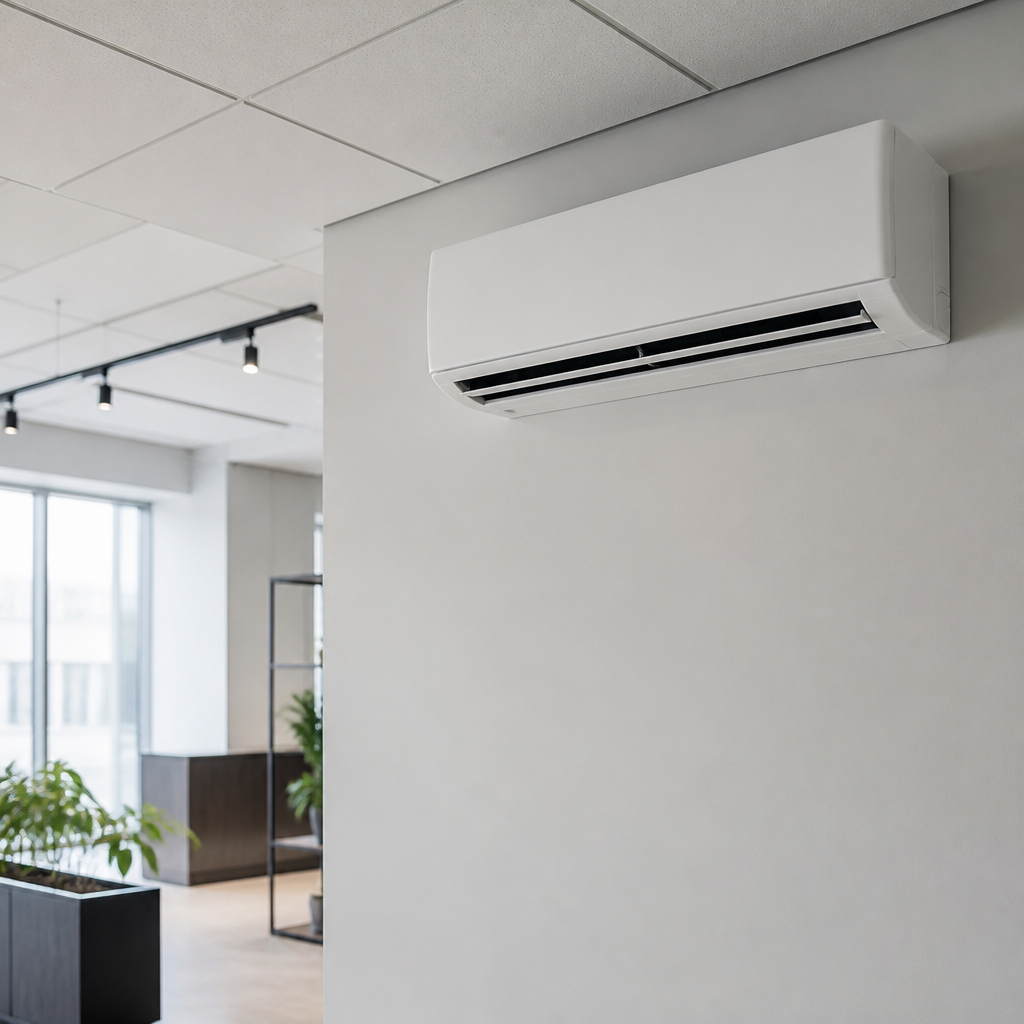
Wall-mounted commercial mini-split system installed in a modern South Florida office

Commercial Mini-Split Systems for South Florida Businesses: Flexible Cooling with Minimal Downtime

When business operations depend on reliable climate control, choosing the right HVAC system becomes a strategic decision. Commercial mini-split systems offer flexible, energy-efficient cooling while minimizing installation downtime — an important advantage for businesses throughout South Florida.

In a region where HVAC systems often operate for more than 2,000 hours each year because of the hot, humid climate, selecting the right commercial solution can improve comfort, reduce operating costs, and support long-term equipment performance.

Unlike traditional central HVAC systems, commercial mini-splits provide independent temperature control for individual spaces without requiring extensive ductwork. They are an excellent choice for offices, retail stores, restaurants, medical facilities, server rooms, and commercial renovations where flexibility is essential.

At AURA AMERICA HVAC, we help business owners, property managers, and commercial contractors design and install HVAC solutions that meet their buildings' needs, operational requirements, and local code requirements throughout South Florida.

Where Commercial Mini-Splits Outperform Traditional HVAC Systems

Not every commercial building benefits from a rooftop unit (RTU) or a conventional ducted system. Many South Florida businesses occupy older buildings, tenant spaces, or properties where adding ductwork would be expensive, disruptive, or simply impractical.

Commercial mini-split systems are particularly effective for:

● Server rooms requiring dedicated year-round cooling

● Restaurant dining areas and kitchen expansions

● Retail build-outs in shopping centers

● Professional offices in older buildings

● Medical offices with independently controlled treatment rooms

● Warehouses with conditioned office spaces

● Commercial additions where extending existing ductwork is impractical

● Facilities with equipment that generates continuous heat

● Spaces operating 24 hours a day that require reliable climate control

Because each indoor unit operates independently, businesses can cool only the occupied areas rather than condition the entire building. This zoned approach improves efficiency while giving occupants greater control over indoor comfort.

Why Downtime Matters for Commercial Projects

For businesses, the installation schedule is about more than completing the work quickly. Every hour of disruption can affect employees, customers, and daily operations.

One of the greatest advantages of commercial mini-split systems is that installation can often be completed in phases. Instead of shutting down an entire facility, technicians may install equipment one zone at a time, allowing other areas of the business to remain operational.

Traditional central HVAC replacements frequently require significant duct modifications, longer shutdown periods, and more extensive construction. A properly planned mini-split installation can greatly reduce operational interruptions.

For restaurants, professional offices, retail stores, medical facilities, and other commercial properties, minimizing downtime is often just as important as improving energy efficiency.

Choosing the Right Commercial Mini-Split Configuration

The best system depends on how the building is used, the number of occupied spaces, and future expansion plans.

ConfigurationBest ApplicationsZoning FlexibilityInstallation DowntimeService While Business Remains OpenWhat Influences the Project Budget
Single-Zone Mini-SplitServer rooms, equipment rooms, private officesOne independent zoneVery lowUsually yesCooling capacity, electrical requirements, refrigerant line length
Multi-Zone Mini-SplitRetail spaces, restaurants, small officesMultiple independent zonesLowUsually yesNumber of indoor units, piping layout, building access
VRF / VRV SystemHotels, medical facilities, larger office buildingsExtensive zoningModerate with phased installationOften yes when properly plannedBuilding size, controls, branch controllers, zoning complexity

Instead of asking, “How much does a commercial mini-split system cost?” it is more useful to understand what determines the scope of a project.

Factors that influence the overall project include:

● Required cooling capacity

● Building layout

● Number of indoor units

● Electrical service capacity

● Refrigerant piping distance

● Accessibility of installation areas

● Existing building conditions

● Permit requirements

● Equipment selection

● Future expansion plans

Because every commercial property is unique, AURA AMERICA HVAC does not publish fixed pricing or provide quotes over the phone. After evaluating your building, our technician prepares a detailed written estimate that explains every part of the proposed solution before any work begins. Providing an exact price before inspecting the equipment would only be a guess, and reliable contractors avoid making assumptions about commercial HVAC projects.

Choosing the Right Brand for Commercial Applications

Different commercial facilities have different operating requirements, which is why equipment selection should always match the application rather than focusing on a single feature.

Daikin

Daikin is our preferred choice for many commercial applications because of its broad product lineup, advanced controls, excellent efficiency ratings, and strong product support. Whether cooling a single office or an entire commercial facility, Daikin offers scalable solutions that adapt to changing business needs.

Mitsubishi Electric P-Series

The P-Series is designed for light commercial applications that require dependable performance, precise temperature control, and reliable operation in offices, retail spaces, and specialty rooms.

Mitsubishi CITY MULTI

CITY MULTI systems are engineered for larger commercial buildings that require advanced zoning, centralized controls, and efficient management of multiple occupied spaces.

LG Commercial Systems

LG offers flexible commercial HVAC solutions that work well for retail stores, office renovations, mixed-use buildings, and businesses where installation flexibility is a priority.

These manufacturers provide equipment for different commercial projects, and selecting the right system depends on building size, occupancy patterns, cooling loads, and long-term operational goals rather than brand name alone.

Commercial Permits Can Affect Your Project Timeline

Commercial HVAC projects involve much more than installing new equipment. Depending on the building type and the scope of work, permits, inspections, and code compliance may all be required before a system can be placed into service.

In South Florida, commercial HVAC installations typically require mechanical permits and inspections. Additional electrical reviews or documentation may also be necessary, depending on the project. Permit review times vary by municipality, which means the approval process can influence the overall project schedule just as much as the installation itself.

Working with an experienced commercial HVAC contractor helps ensure that all required documentation is prepared correctly before installation begins, reducing the risk of unnecessary delays.

Official resources:

● Florida Building Code: https://www.floridabuilding.org

● Florida Department of Business and Professional Regulation (DBPR): https://www.myfloridalicense.com

Always verify local requirements with the authority having jurisdiction, as permit procedures and inspection requirements may vary between municipalities.

Preventive Maintenance Protects Your Investment

Commercial HVAC equipment operates for extended periods in South Florida’s demanding climate. High humidity, long cooling seasons, and salt-laden coastal air place continuous stress on mechanical components.

For most businesses, preventive maintenance is significantly more valuable than waiting for equipment to fail. A scheduled maintenance agreement helps reduce unexpected downtime while keeping the system operating efficiently throughout the year.

Routine commercial maintenance typically includes:

● Comprehensive system inspections

● Coil cleaning

● Air filter replacement

● Refrigerant performance verification

● Electrical component testing

● Drain line inspection and cleaning

● Thermostat and control calibration

● Documentation of system performance

Regular maintenance can help improve energy efficiency, identify worn components before they fail, support manufacturer warranty requirements, and extend the service life of the equipment.

Rather than relying on emergency service calls, many property owners and facility managers choose preventive maintenance plans to help protect their HVAC investment and maintain business continuity.

How to Choose the Right Commercial HVAC Contractor

Selecting the right contractor is just as important as selecting the right equipment. Commercial HVAC projects require experience, careful planning, and a thorough understanding of South Florida’s climate and building requirements.

When evaluating a contractor, look for a company that:

● Specializes in commercial HVAC systems rather than primarily residential work.

● Understands local permitting requirements and Florida building codes.

● Designs systems based on your building’s operational needs.

● Plans installations to minimize business downtime.

● Recommends equipment that supports long-term efficiency and reliability.

● Offers preventive maintenance agreements after installation.

● Provides detailed written estimates instead of verbal price quotes.

● Has Russian- and Spanish-speaking technicians on staff for multilingual communication.

● Holds the appropriate Florida HVAC license.

AURA AMERICA HVAC is licensed under CMC1251254 and operates from offices in Pompano Beach and Big Pine Key, serving businesses throughout South Florida with professional commercial HVAC installation and service.

Why Businesses Choose Commercial Mini-Split Systems

Commercial mini-split systems continue to gain popularity because they provide flexibility that traditional HVAC systems often cannot match. Independent zoning, lower installation disruption, improved comfort, and scalable system design make them an excellent choice for many commercial applications throughout South Florida.

Whether you are planning a tenant build-out, renovating an existing office, upgrading a restaurant, or adding cooling to a server room, the right commercial mini-split system can improve comfort while helping your business operate more efficiently.

Every commercial property has unique requirements. A professional site evaluation ensures that equipment selection, system design, permitting, and installation all align with your building’s needs and long-term operational goals.

Frequently Asked Questions

Are commercial mini-split systems suitable for businesses that operate 24/7?

Yes. They are frequently installed in server rooms, healthcare facilities, equipment rooms, and other spaces that require continuous cooling without affecting the rest of the building.

Can my business remain open during installation?

In many cases, yes. Commercial mini-split systems can often be installed in phases, allowing technicians to work in one area while other parts of the business continue operating.

Do commercial mini-split systems require permits?

Most permanent commercial HVAC installations require permits and inspections. Requirements vary by municipality and depend on the scope of the project.

How often should commercial mini-split systems be serviced?

Most commercial systems should be professionally serviced at least twice a year. Facilities that operate continuously or are exposed to demanding environmental conditions may benefit from more frequent maintenance.

Why is a maintenance agreement better than calling for repairs only when something breaks?

Preventive maintenance helps reduce unexpected downtime, improves system efficiency, supports manufacturer warranty requirements, and allows potential issues to be identified before they become costly failures.