
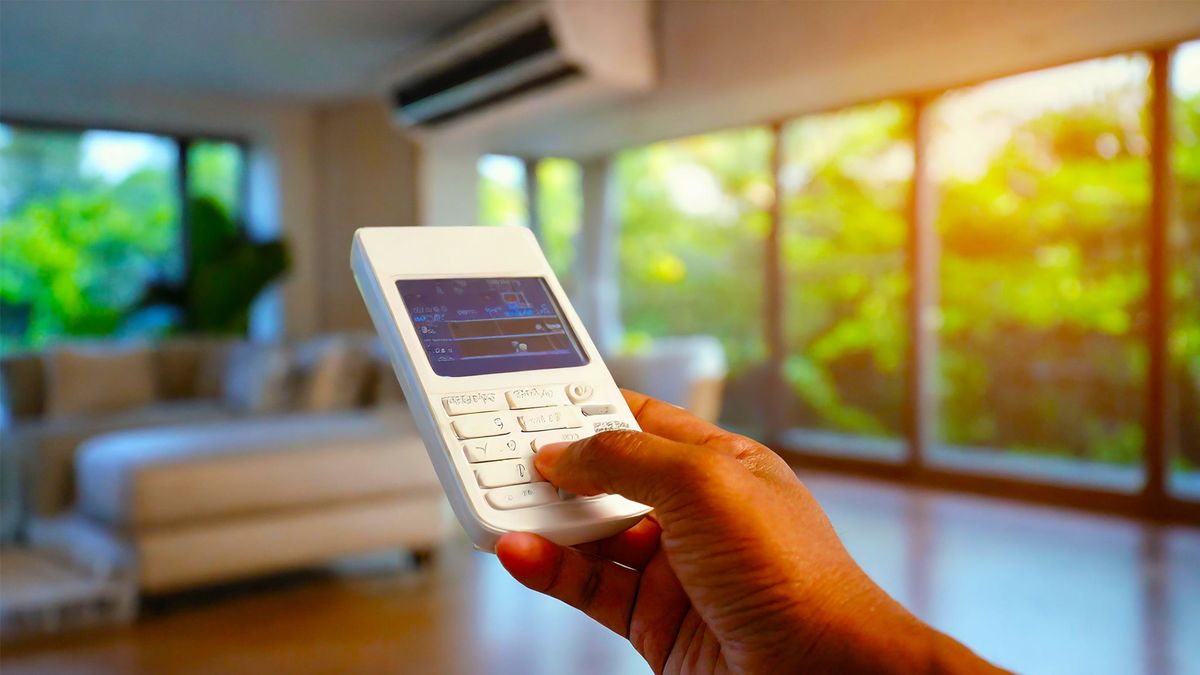
Homeowner adjusting AC settings with a remote in a Florida living room

The Most Energy-Efficient AC Options for Hot, Humid Florida

Florida homeowners often ask the same question: what is the most energy-efficient air conditioner for a hot Florida home? The answer is not simply the unit with the highest efficiency number. In South Florida, an efficient AC system must be correctly sized, professionally installed, and matched to how the home actually operates.

With air conditioning running for 2,000+ hours a year, even relatively small differences in system efficiency can matter over time. For homeowners comparing replacement options, the key factors are SEER2, compressor technology, system design, equipment sizing, and installation quality.
What Really Affects AC Energy Use in Florida?

An air conditioner’s electricity consumption depends on more than its nameplate efficiency.

The biggest factors include:

  • how efficiently the system converts electricity into cooling;

  • how often and how hard the compressor operates;

  • whether the compressor can adjust its output;

  • whether the equipment is correctly sized for the home;

  • ductwork and airflow;

  • refrigerant charge and system condition;

  • how well the system is installed and maintained.

The U.S. Department of Energy uses SEER2 as a seasonal measure of cooling efficiency. In general, a higher SEER2 rating indicates greater efficiency under the standardized testing conditions used for the rating.

But a higher rating alone does not guarantee lower energy use in a particular home. The complete system and its installation matter.

SEER2: What Should Florida Homeowners Look For?

SEER2 stands for Seasonal Energy Efficiency Ratio 2. It expresses cooling efficiency over a standardized seasonal operating profile.

Think of it as a useful comparison tool when evaluating different systems. If two properly matched systems are otherwise comparable, the system with the higher SEER2 rating generally has greater rated cooling efficiency.

However, homeowners should not choose equipment based on SEER2 alone.

A professional evaluation should also consider:

  • the home’s cooling load;

  • the required system capacity;

  • ductwork condition;

  • airflow;

  • indoor and outdoor equipment compatibility;

  • control strategy;

  • expected operating pattern.

The goal is not simply to buy the highest-rated equipment. It is to select a system that can operate efficiently in the actual home.

Why Inverter and Variable-Speed Technology Matters

One of the most important developments in residential AC efficiency is variable-capacity operation.

Traditional systems generally operate at or near full capacity when cooling is required and then shut off. Variable-speed and inverter-driven systems can adjust compressor output rather than operating at only one level.

That allows the system to respond more closely to the home’s current cooling demand.

The result can be more efficient operation, fewer abrupt starts and stops, and more consistent temperature control. DOE testing procedures specifically account for variable-speed compressor operation when calculating SEER2.

For a Florida homeowner considering a new system, inverter technology is therefore worth evaluating alongside the SEER2 rating, rather than treating SEER2 as the only measure that matters.

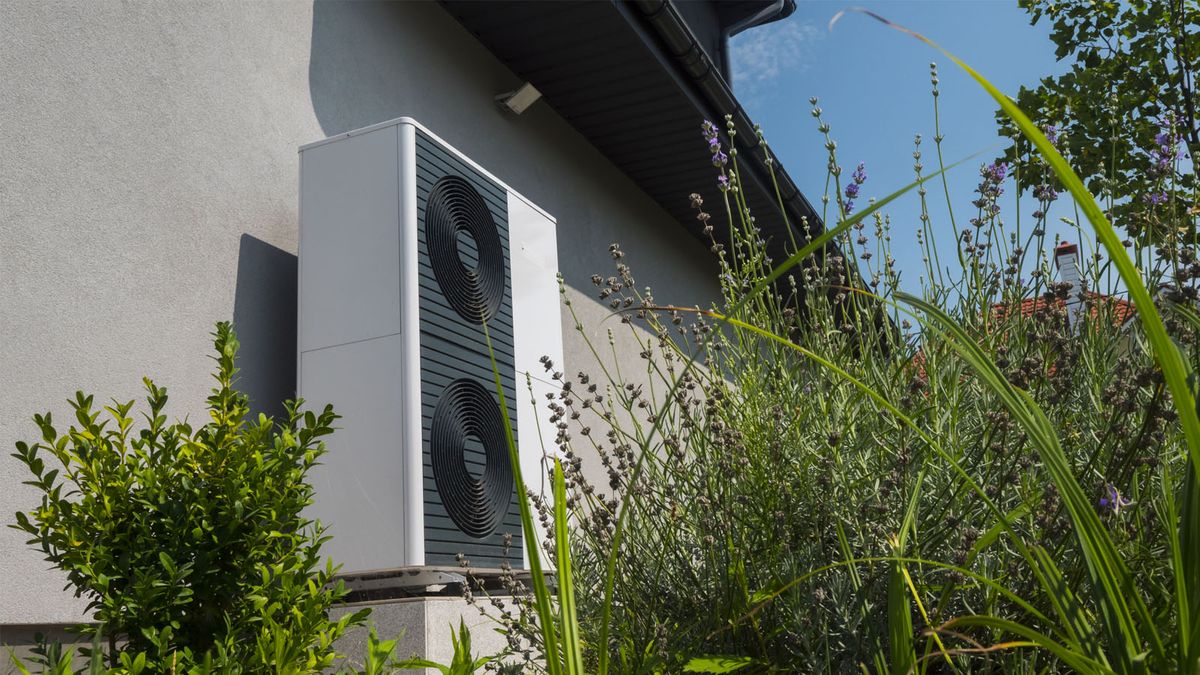
Outdoor AC unit mounted on the exterior wall of a home

Daikin: A Strong Option for High-Efficiency Florida Homes

When comparing high-efficiency HVAC equipment, Daikin deserves particular attention.

Its inverter-based technologies are designed to modulate system output instead of relying exclusively on repeated full-capacity cycles. Daikin also offers VRV technology for applications where variable refrigerant flow and zoning flexibility are important.

The right Daikin system, however, depends on the home’s design and cooling requirements. Equipment should be selected based on an actual assessment rather than simply choosing the model with the highest published efficiency.

For Florida homeowners, this distinction is important: high-efficiency equipment performs best when the entire system is designed around the home.

Are Mini-Splits One of the Most Energy-Efficient AC Options?

They can be.

Ductless mini-split systems can be particularly useful where individual zones need independent temperature control or where extending conventional ductwork is impractical.

Inverter-driven mini-splits can adjust output according to the cooling demand of each zone. That can make them an efficient solution for appropriately designed applications.

But a mini-split is not automatically the best choice for every Florida home. The home’s layout, number of zones, insulation, existing ductwork, and cooling requirements should determine whether ductless or central equipment makes more sense.

Correct Sizing Is Just as Important as Equipment Efficiency

An extremely efficient AC can still perform poorly if it is incorrectly sized.

Oversized equipment can cycle too frequently rather than operating through longer, more efficient cycles. ENERGY STAR notes that proper sizing is essential for both efficiency and comfort.

That is why a professional replacement should not be based on a simple square-footage rule.

A quality installation considers the home's actual characteristics and determines the appropriate equipment capacity. Proper airflow and refrigerant charge are also important to system performance.

Oversizing has another consequence beyond wasted energy: a system that cools too quickly often shuts off before it has run long enough to remove humidity from the air, leaving a home feeling cool but still damp. We cover that trade-off in more detail in our guide to choosing an AC for high-humidity Florida homes.

How to Choose an Energy-Efficient AC in Florida

Before choosing a new system, homeowners should look at:

FactorWhy it matters
SEER2Helps compare rated cooling efficiency
Inverter / variable-speed technologyAllows output to adjust to cooling demand
Correct sizingPrevents inefficient cycling and poor system performance
Airflow and ductworkPoor airflow can reduce efficiency
Installation qualityEquipment performance depends on correct installation
MaintenanceDirty coils, restricted airflow and incorrect refrigerant charge can increase energy use

ENERGY STAR notes that poor airflow can reduce efficiency, while dirty coils and an incorrect refrigerant charge can cause an AC to run longer and increase energy consumption.

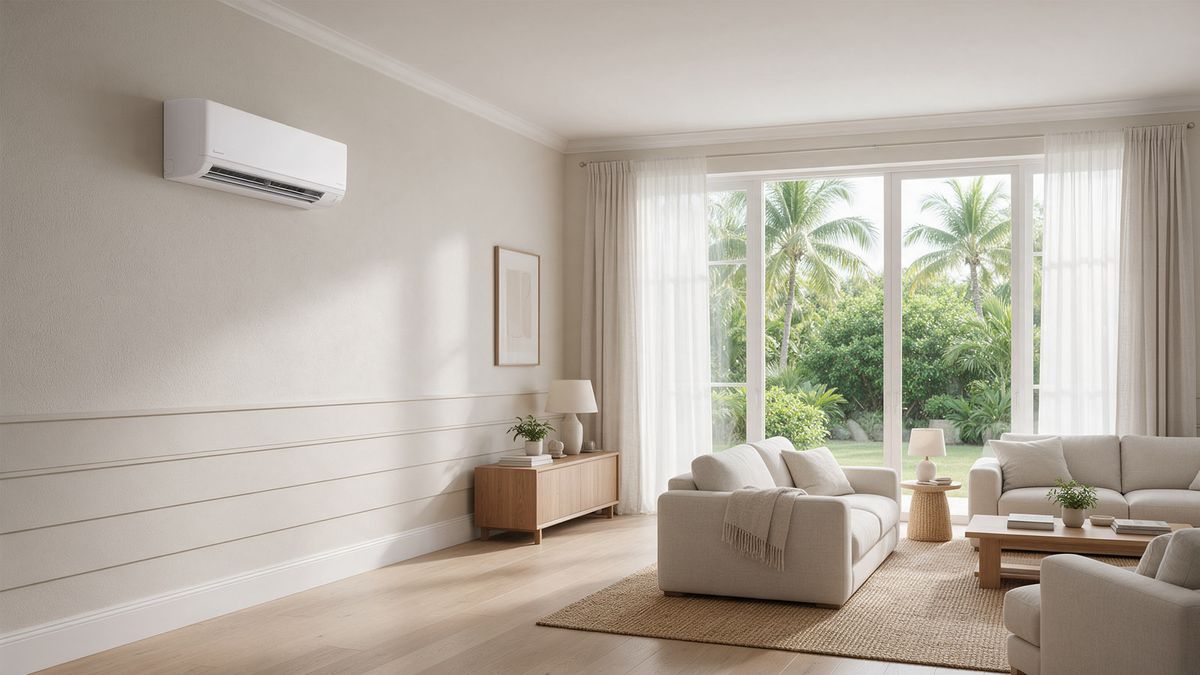
Wall-mounted ductless mini-split in a bright Florida living room

The Most Efficient AC Is the Right System for Your Home

There is no single AC model that is automatically the most energy-efficient choice for every Florida house. The better question is: which system can deliver the required cooling with the lowest practical energy use for this particular home?

That usually means looking beyond the equipment label and evaluating SEER2, inverter technology, system capacity, airflow, ductwork, and installation quality together.

At Aura America HVAC, we evaluate these factors before recommending a system rather than treating one efficiency number as the whole answer.

Our licensed team, operating under license number CMC1251254, serves South Florida from offices in Pompano Beach and Big Pine Key, with Russian- and Spanish-speaking technicians on staff.

For homeowners considering replacement, an on-site evaluation allows the equipment and system design to be matched to the home before a recommendation is made.

FAQ

What is the most energy-efficient AC for a Florida home?

It depends on the home. High-SEER2 inverter and variable-speed systems can offer excellent efficiency, but correct sizing and installation are equally important.

Is a higher SEER2 always better?

A higher SEER2 indicates higher rated efficiency, but it should not be the only factor used to select equipment.

Are inverter AC systems more energy-efficient?

Variable-speed inverter systems can adjust output to match cooling demand and can operate more efficiently than systems that rely primarily on full-capacity cycling.

Are mini-splits energy-efficient in Florida?

They can be, particularly for properly designed zoned applications. The best option depends on the home’s layout and cooling requirements.

Does AC maintenance affect energy efficiency?

Yes. Dirty coils, restricted airflow, and an incorrect refrigerant charge can reduce efficiency and increase the time the system runs.

Call Aura America HVAC to schedule your appointment!