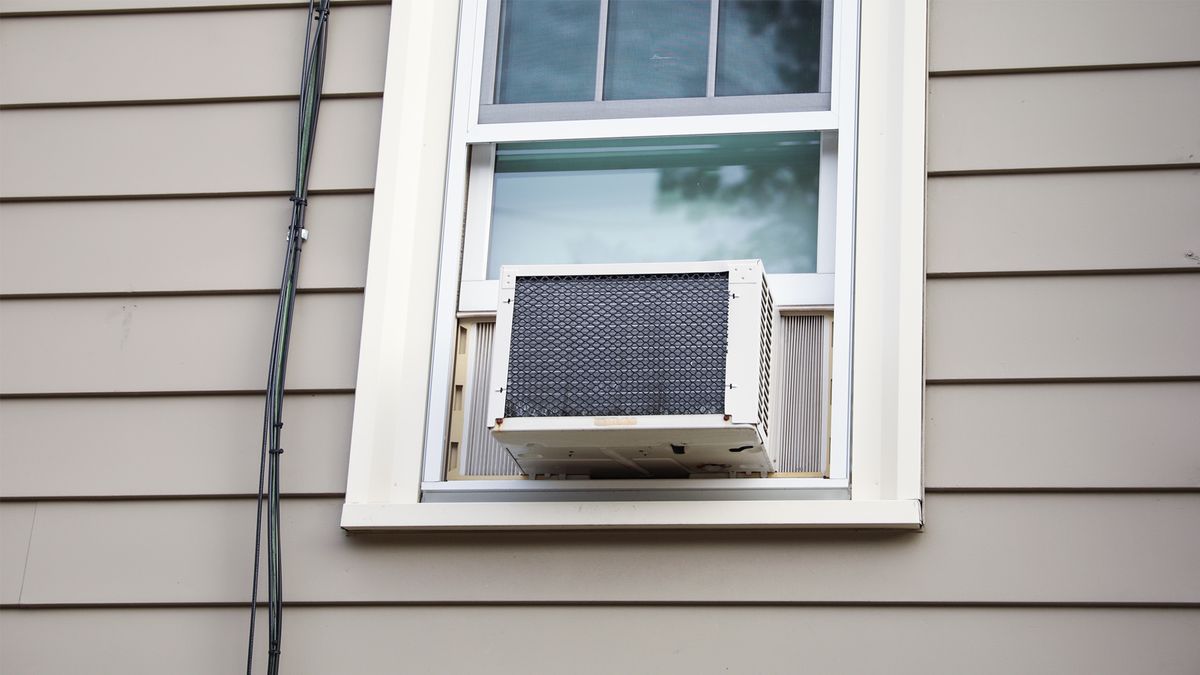
Window air conditioners are designed to provide localized cooling. That can make them useful in limited or temporary situations, but their basic design creates several problems when they are expected to serve as a home's primary cooling solution.
Limited coverage
A window AC primarily cools the room where it is installed. It does not provide the same integrated distribution as a whole-home HVAC system.
For a house with multiple bedrooms, living areas, or separate zones, relying on individual room units can result in uneven temperatures. One room may feel cold while another remains uncomfortable.
Adding more units does not solve the underlying issue. It simply creates several independent cooling points instead of a properly designed residential HVAC system.
Humidity control matters
Indoor comfort is about more than temperature. Humidity also plays an important role in how a home feels.
A properly sized and installed split or central air-conditioning system can cool the conditioned space while removing moisture as part of normal operation. A window unit is focused primarily on the individual room where it operates.
For homeowners, this distinction matters because a home can have a low thermostat reading and still feel uncomfortable if humidity is not adequately managed.
Efficiency is more than a rating
Modern HVAC systems can offer substantially more sophisticated control than a basic room air conditioner.
Many mini-split and central systems use inverter or variable-capacity technology that allows the equipment to adjust its output according to demand. However, equipment efficiency depends on more than the number on the specification sheet. System sizing, installation, airflow, controls, refrigerant piping, and the condition of existing ductwork all affect performance.
The U.S. Department of Energy recommends proper sizing and installation of air-conditioning equipment, while ENERGY STAR emphasizes professional installation and correct system selection for efficient operation.